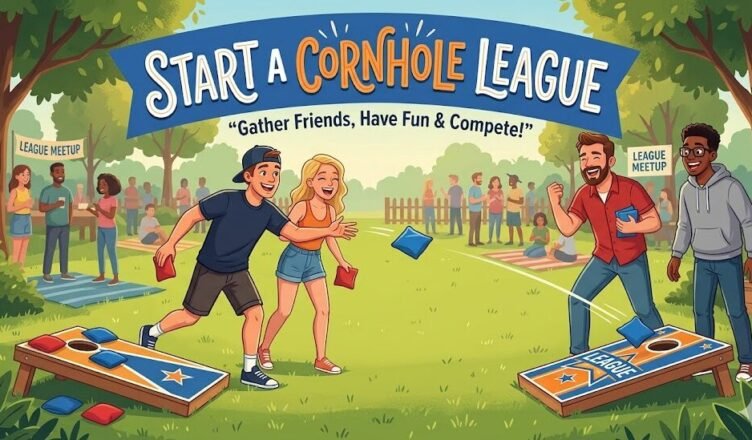
You love cornhole. Your friends love cornhole. The neighbors seem interested. So why is everyone just playing random backyard games instead of doing this properly?
Starting a cornhole league is easier than you think. You don’t need a big budget, a fancy venue, or a hundred players. You need a handful of people who enjoy throwing bags, a consistent place to play, and enough organization to keep things running smoothly. That’s it.
This guide walks you through everything — from finding a venue and recruiting players to choosing a format and keeping the league fun week after week. Whether you’re starting a casual neighborhood league or something more competitive, these steps will get you there.
Step 1: Find Your Venue
The venue makes or breaks your league. You need enough space for multiple sets of boards, and ideally a place where people can eat, drink, and hang out between games.
Best venues for a cornhole league:
Bars, breweries, and restaurants — This is the most popular option for a reason. The venue gets 30-50 hungry, thirsty customers every week. You get a space with food, drinks, and atmosphere. It’s a win-win. Approach the manager and pitch it: “I’ll bring 30+ people to your establishment every week on a slow night in exchange for use of your space.” Most bars will jump at this.
VFWs, Elks clubs, and community halls — These organizations often have large rooms available on weekday evenings and are usually happy to host community events. Many will provide the space free or for a minimal fee since members will be buying food and drinks.
Garages and basements — The ultimate casual league. If someone in your group has a large enough garage or finished basement (you need about 40′ x 50′ for 4-6 sets of boards), you can run a league from there. BYOB and potluck style.
Parks and outdoor spaces — Free and open, but weather-dependent. Great for summer leagues. Check with your city about permits if you’re using public space regularly.
Church halls and gym spaces — Many churches and community centers rent space affordably on weekday evenings. The controlled indoor environment is great for consistent play.
What to look for: Enough room for at least 4 sets of boards (minimum 40′ x 50′), access to food and drinks (or the ability to bring your own), parking, restrooms, and a location that’s convenient for most of your players. Think about growth — start with space for 4 sets of boards even if you only need 2 at first.
Step 2: Get Your Equipment
You don’t need much to start, but quality matters. Bad boards will drive players away faster than anything else.
Boards: Start with 2-4 sets of quality boards. You don’t need ACL PRO boards, but avoid the cheapest Amazon sets — thin, bouncy boards ruin the experience. Look for ½” to ¾” plywood tops with cross-brace frames. If budget allows, a set of ACL COMP boards elevates your league immediately. Check our Best Cornhole Sets guide for recommendations at every price point.
Bags: Most leagues run BYOB (Bring Your Own Bags). Serious players have strong bag preferences and will bring their own. For newcomers who don’t have bags yet, keep a few house sets available. See our Best Cornhole Bags guide for options.
Scorekeeping: This is where modern leagues get a huge upgrade. The Scoreholio app is the most popular scoring platform for cornhole leagues. It handles player check-in, random partner assignments, score tracking, standings, and even player ratings. It’s free for basic use and worth every penny for premium features. You can also go old-school with a whiteboard and markers.
Score towers (optional): Physical score trackers at each board are a nice touch. They help players keep track during games and often include cup holders — a practical bonus. Check out our review of Scoring Towers
Step 3: Recruit Players
You need at least 10-12 players to run a viable league. 20-30 is the sweet spot. Here’s how to find them:
Start with your circle. Text your friends, family, and coworkers. You probably know 10 people who’d show up for weekly cornhole and drinks. That’s your core group.
Facebook is your best friend. Create a Facebook page for your league. Give it a name (something memorable and local). Create events for each league night. Share the page in local community groups, neighborhood groups, and any cornhole-related groups in your area. This is how most successful leagues grow.
Talk to local businesses. Bars, restaurants, and shops might sponsor a team or promote your league to their customers. A brewery sponsoring a team gets their brand in front of your players every week — it’s cheap marketing for them.
Flyers at the venue. If you’re playing at a bar or community space, put up flyers. The regulars who see cornhole happening every week will get curious and want to join.
Word of mouth is king. Once you start, your best recruiting tool is people telling their friends “I play in this awesome cornhole league.” Make the experience fun enough that players actively recruit for you.
Pro tip: Don’t wait until you have “enough” players. Start with whoever you’ve got — even 8 people is enough for a fun evening. The league will grow organically once people see it happening.
Step 4: Choose Your Format
The format determines how your league feels. Choose based on your group’s personality.
Blind Draw / Round Robin (Best for Social Leagues) Players show up individually. Partners are randomly assigned each week (or rotated throughout the evening). Everyone plays multiple games, and individual points accumulate over the season. This format is the most social because you play with different people every week. It’s great for mixing skill levels and building friendships. Scoreholio’s “Switcholio” format handles this automatically.
Bring Your Own Partner (BYOP) (Best for Competitive Leagues) Teams of two sign up together and play as a pair all season. Teams play against other teams in a scheduled format. This is more competitive and allows partners to develop strategy together. If skill levels vary widely, consider creating divisions (A/B or Competitive/Recreational) so beginners aren’t getting crushed by experienced teams every week.
Singles League Every player competes individually, head to head. This is the purest test of skill but less social than doubles formats. Best for smaller groups of experienced players.
Season structure: Most leagues run 8-12 week seasons followed by playoffs. Require a minimum attendance (5 out of 10 weeks, for example) to qualify for playoffs. Keep regular-season standings visible and updated weekly to maintain interest and competition.
Step 5: Set the Rules and Details
Get these decided before your first night:
Schedule: Pick a consistent day and time. Tuesday, Wednesday, or Thursday evenings work well — they’re typically slow nights for venues and don’t conflict with weekend plans. Start between 6:30 and 7:30 PM. Stick to the same night every week.
Rules: Use official ACA or ACL rules as your base. Decide on: scoring to 21 (cancellation scoring), board distance (27 feet), and whether you allow or restrict specific bag types. Keep rules simple — the more complicated your rulebook, the more arguments you’ll have.
Fees: Most leagues charge $5-$15 per player per week or a flat season fee ($50-$100). This covers prizes for playoff winners, equipment maintenance, and potentially venue costs. Be transparent about where the money goes. Some leagues also do a 50/50 raffle each week for extra fun.
Divisions: If your league has a wide range of skill levels, create two divisions. Nothing kills a beginner’s enthusiasm faster than losing every game to experienced players. A Competitive and Recreational split keeps things fun for everyone.
Code of conduct: Keep it simple: be respectful, don’t interfere with opponents’ throws, no unsportsmanlike behavior, and have fun. Address issues privately and quickly before they fester.
Step 6: Make It Fun (This Is the Most Important Step)
A league that’s all competition and no fun won’t survive. Here’s what separates great leagues from ones that fizzle out:
The social element matters more than the competition. People come back because of the people, not just the games. Encourage socializing between rounds. Build in time for food and drinks. Celebrate birthdays and milestones. Create inside jokes and traditions.
Post results on social media. Weekly standings, photos, highlight shots, and funny moments keep engagement high between league nights. Tag players. Celebrate the winners. Roast the losers (gently). This builds community and attracts new players.
End-of-season events. Throw a party for the playoff finals. Trophies or silly awards (Best Airmail, Most Improved, Best Trash Talk) make the last night special and give players something to look forward to.
Welcome newcomers warmly. Every new player should be greeted, shown the ropes, and paired with someone friendly for their first night. First impressions determine whether they come back.
Consider charity tie-ins. Partner with a local charity for occasional fundraiser nights. A 50/50 raffle or charity tournament adds meaning to the competition and looks great for your league’s reputation.
If folks are interested in learning more about setting up a league, please leave a comments below. I have some additional resources and tools that might be helpful. If there is enough interest, I might look into create a free web site that allows folks to start and find cornhole teams/leagues in their area.
Frequently Asked Questions
How many players do I need to start a cornhole league? You can start with as few as 8-10 players. The sweet spot is 20-30, which gives you enough for 4-6 boards running simultaneously with good variety in matchups. Don’t wait for a perfect number — start with who you have and grow from there.
How much does it cost to start a cornhole league? Your biggest expense is boards. Budget $200-$600 for 2-4 quality sets. If you use Scoreholio for scoring and find a venue that provides space in exchange for food/drink sales, your ongoing costs are minimal. Most leagues are self-sustaining through weekly player fees within the first season.
What scoring app should I use for a cornhole league? Scoreholio is the industry standard. It handles player registration, random partner assignments, score tracking, standings, player ratings (SPR+), and even online payments. It’s free for basic tournaments and offers premium features for leagues. It’s what most organized cornhole leagues across the country use.
How long should a cornhole league season be? 8-12 weeks is standard, followed by 1-2 weeks of playoffs. This is long enough to build meaningful standings but short enough that players stay committed. Two seasons per year (spring/summer and fall/winter) is a common cadence.
Do I need to register my league with the ACL or ACA? No — you can run a completely independent league. However, if you want your league to feed into official ACL tournaments and give players official ratings, you can register as an ACL affiliate. This is optional and more relevant for competitive leagues than casual neighborhood ones.
Need equipment for your league? Check out our Best Cornhole Sets, ACL Approved Boards, and Best Cornhole Bags. Already running a league? See our guide on How to Run a Cornhole Tournament for event ideas.