PaddleSmash: The Pickleball-Spikeball Mashup Taking Over Backyards
Take the paddle-based precision of pickleball. Combine it with the circular-net, 360-degree action of Spikeball. Add a Shark Tank deal with Mark Cuban and Robert Herjavec. The result is PaddleSmash — the backyard game that’s generating the most buzz since Spikeball itself appeared on Shark Tank a decade ago.
But buzz and quality aren’t the same thing. Plenty of “as seen on TV” games land with a splash and collect dust in the garage two months later. So does PaddleSmash actually deliver, or is it just clever marketing on top of a mediocre game?
After researching every review, breakdown, and player reaction we could find, here’s our honest take.
What Is PaddleSmash?
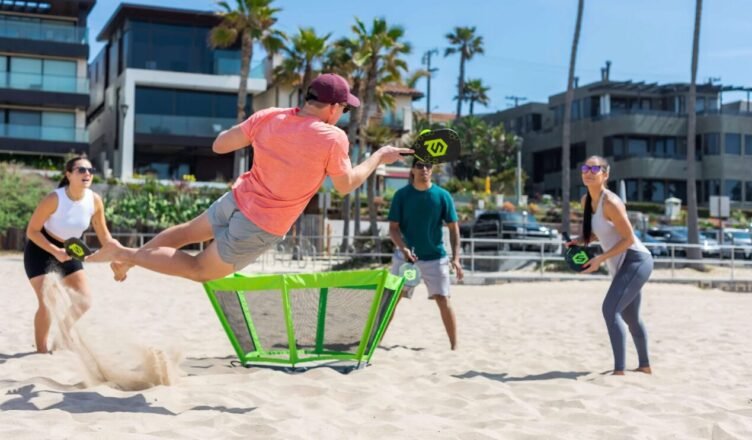
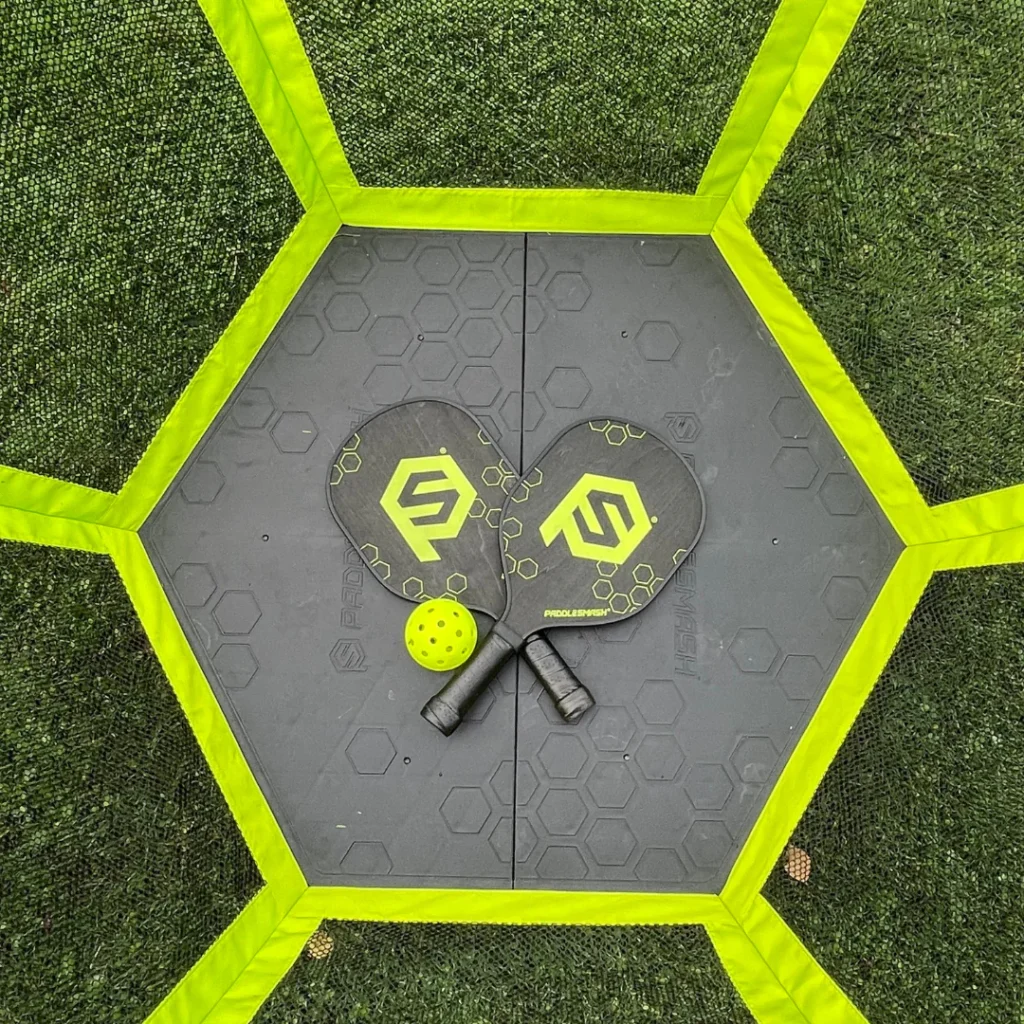
PaddleSmash is a 2v2 outdoor game played around a circular net (similar to Spikeball) using paddles (similar to pickleball) instead of hands. Teams take turns hitting a ball onto the net, trying to make it difficult for the opposing team to return. The net sits at ground level, and players circle around it in 360 degrees.
The basics:
- Players: 4 (2v2)
- Equipment: 1 circular net/court, 4 paddles, 2 balls
- Scoring: Games played to 11 points, win by 2
- Gameplay: Bump, set, smash — each team gets up to 3 touches before returning the ball to the net
- Setup: Under 5 minutes, the court base doubles as the carrying case
The game was invented by Joe Bingham, a structural engineer and father of seven who wanted something that combined the energy of Spikeball (which he could no longer keep up with) and the paddle mechanics of pickleball (whose courts were always packed). The result is a game that’s more accessible than Spikeball but more active than traditional tossing games.
How PaddleSmash Actually Plays
The learning curve is real. Nearly every review mentions this: the first 10-15 minutes are rough. You’ll whiff, mis-hit, and send balls flying in random directions. The coordination of hitting a ball with a paddle onto a circular net at the right angle takes practice. This is normal — Spikeball has the same learning curve. Push through it.
Once it clicks, it clicks. After those first awkward minutes, rallies start developing. The back-and-forth flow emerges. Strategic placement becomes possible. And the smash kills — when you time one perfectly — are genuinely satisfying. The paddle adds a different dimension than hitting with your hand in Spikeball. You get more power and more control once you develop the feel.
It’s more accessible than Spikeball. You don’t need to dive onto the ground or spike a ball with your bare hands. The paddles provide reach and power without requiring athletic hand-eye coordination. Players who find Spikeball too intense or physical often enjoy PaddleSmash because the paddles make it feel more controlled.
It’s more active than cornhole or bocce. You’re moving constantly — circling the net, positioning for returns, lunging for saves. It’s a legitimate workout disguised as a game. If your group is tired of standing-in-one-spot tossing games and wants something with more movement, PaddleSmash fills that gap perfectly.
The PaddleSmash Set: What You Get
There’s currently one PaddleSmash set available — the official PaddleSmash set from the company. No knockoffs or alternatives (yet). Here’s what’s in the box:
Official PaddleSmash Set (~$200)
- 1 PaddleSmash court (circular net with foldable legs — the base doubles as a carrying case)
- 4 wooden paddles
- 2 balls
- Rules and instructions
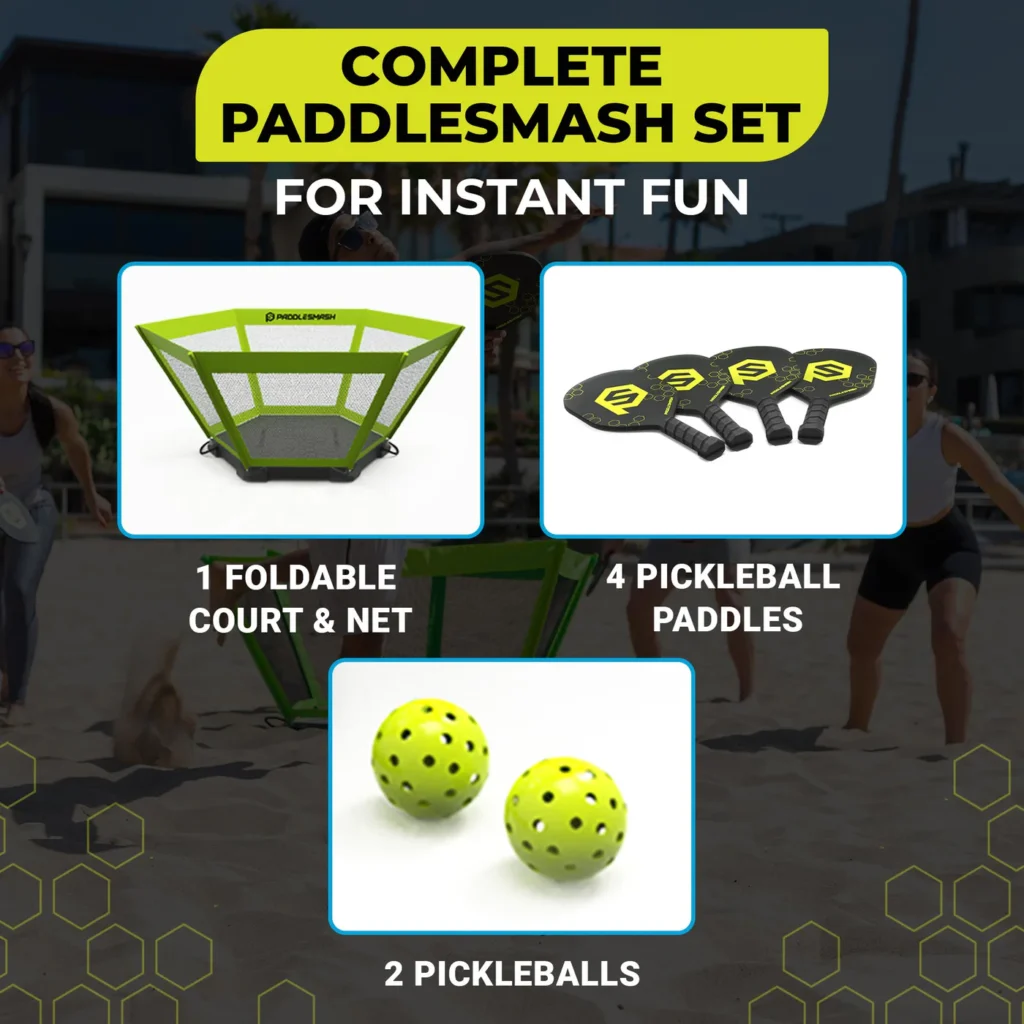
The build quality is solid. The court is sturdy and doesn’t tip during play — important for a game where balls are being smashed into a net. The paddles are wooden with comfortable grips. The folding design means the entire set packs into its own court/case for transport.
At $200, it’s the most expensive single game on our site. That’s a lot — but it includes everything for 4 players, the build quality is premium, and the game genuinely delivers a unique experience you can’t get from any other product.
Worth noting: PaddleSmash also makes TowerToss, a newer tossing game with a tower target that players attack from all sides. If you like the PaddleSmash brand but want something less physical, TowerToss is worth a look.
[AFFILIATE LINK PLACEHOLDER — Search Amazon for “PaddleSmash Pickleball Yard Game Shark Tank”]
Who PaddleSmash Is For (And Who It’s Not For)
PaddleSmash is great for:
- Pickleball players who want a backyard version of the paddle experience
- Spikeball fans who want something slightly less athletic
- Active friend groups (20s-40s) who want more movement than cornhole
- Beach and park players — works great on sand and flat grass
- Families with teens (rated 14+)
PaddleSmash is NOT great for:
- Young kids — the coordination is too demanding for under-13
- Large groups — it’s strictly 4 players at a time, no rotation-friendly design
- Casual/relaxed party games — if your group wants to hold a drink and chat, stick with cornhole or bocce
- Uneven ground — the circular net needs a reasonably flat surface
- Tight spaces — you need open area for 360-degree movement
PaddleSmash vs. Spikeball vs. Cornhole
| Factor | PaddleSmash | Spikeball | Cornhole |
|---|---|---|---|
| Players | 4 (2v2) | 4 (2v2) | 2-4 |
| Physical Demand | High | Very High | Very Low |
| Learning Curve | Moderate (10-15 min) | High (15-20 min) | None |
| Portability | Good (~12 lbs) | Excellent (~3 lbs) | Poor (~35 lbs) |
| Drink-Friendly | No | No | Yes |
| Age Range | 14+ | Teens-30s | All ages |
| Price | ~$200 | ~$60 | $70-$150 |
| Fun Factor | High (once learned) | Very High (once learned) | High (immediately) |
| Best Vibe | Active competition | Athletic intensity | Social relaxation |
The honest take: PaddleSmash sits between Spikeball and cornhole in intensity. It’s less physically demanding than Spikeball but more active than anything in the tossing game category. If you already own Spikeball AND cornhole, PaddleSmash adds a paddle-based middle ground. If you own neither and can only buy one, cornhole is still the more versatile purchase for most groups.
For a deeper dive on Spikeball vs. cornhole, see our full comparison guide.
Is PaddleSmash Worth $200?
Here’s how we think about it:
Yes, if: You play regularly with a consistent group of 4, you’re looking for something genuinely different from tossing games, you enjoy active competition, or you’re a pickleball fan who wants a backyard paddle game. The build quality justifies the price, and the game is unique — nothing else plays like this.
Not yet, if: You’re buying your first backyard game (start with cornhole — it’s more versatile). Or if your group is mostly casual players who prefer holding a drink while playing. Or if you’re unsure whether your group will commit to the learning curve.
The Shark Tank factor: Mark Cuban and Robert Herjavec invested $250,000 for 20% equity. The company did $100,000 in sales the night the episode aired. That’s validation from both investors and consumers — but ultimately the game has to stand on its own merit, and for the right group, it does.
Frequently Asked Questions
What is PaddleSmash? PaddleSmash is a 2v2 outdoor game that combines elements of pickleball and Spikeball. Players use wooden paddles to hit a ball onto a circular net, trying to make it difficult for opponents to return. It was featured on Shark Tank Season 15 and received investment from Mark Cuban and Robert Herjavec.
How many players do you need for PaddleSmash? PaddleSmash requires exactly 4 players (2 teams of 2). Unlike cornhole or bocce, it doesn’t scale to different group sizes. This is its biggest limitation for party and event use.
Is PaddleSmash easier than Spikeball? Somewhat. The paddles provide more reach and control than hitting a ball with your bare hands. You don’t need to dive or get as low to the ground. However, the paddle-to-net coordination has its own learning curve. Most players find PaddleSmash more accessible than Spikeball but still challenging to master.
Is PaddleSmash worth the money? At $200, it’s a significant investment for a backyard game. The build quality is premium and the gameplay is unique. If you have a regular group of 4 who play actively, it delivers excellent value. If you play casually or with varying group sizes, a more versatile game like cornhole or bocce offers better value per dollar.
Where can you play PaddleSmash? Any flat outdoor surface — grass, sand, gym floors. The game needs open space for players to move 360 degrees around the net. Backyards, beaches, parks, and tailgates all work. Avoid uneven or rocky ground.
Looking for more backyard game options? Check out our Best Backyard Games for Adults, Spikeball vs KanJam vs Cornhole comparison, and our full Backyard Games hub.
This post contains affiliate links. When you purchase through our links, we earn a small commission at no extra cost to you. For more details, see our Affiliate Disclaimer.