
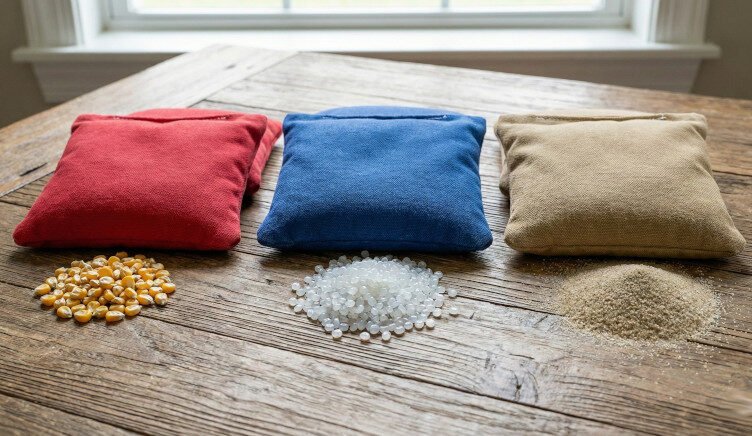
The stuff inside your cornhole bag matters more than most players realize. It affects how the bag feels in your hand, how it flies through the air, how it lands on the board, and how long the bag lasts before you need to replace it.
There are three main fill types you’ll encounter: whole kernel corn (the original), plastic resin pellets (the modern standard), and sand (the budget option). Each plays differently, handles weather differently, and requires different care.
This guide breaks down everything you need to know so you can pick the right fill for how you play.
Corn Fill: The Original
Cornhole gets its name from what’s inside the bags — whole kernel feed corn. This is what people have been playing with for over a century, and there’s a reason the tradition stuck around.

How It Plays
Corn-filled bags have a distinctive feel that’s hard to replicate. The kernels shift and settle in the bag, giving it a slightly loose, natural weight distribution. When a corn bag hits the board, it tends to land with a satisfying thud and grip rather than bounce.
Over time, the corn breaks down from repeated impact. This creates a fine corn dust inside the bag that does two things: it makes the bag softer and floppier (which many players prefer), and it makes the bag slide more on the board surface. Longtime corn bag players call this “the dust effect” — and some consider it an essential part of the game’s character.
Corn bags are also less prone to bouncing compared to resin bags. When your bag hits the board, it’s more likely to stay put. For players who rely on landing bags in specific spots for blocking strategies, this can be an advantage.
Durability and Maintenance
Here’s where corn gets complicated. The natural fill comes with natural problems:
Moisture is the enemy. Wet corn bags can develop mold, mildew, and a terrible smell. One rainy afternoon with your bags left outside can ruin a set. If they do get damp, you need to spread them out and air dry them completely — and quickly.
Critters love corn. Bugs, mice, and other pests will absolutely find their way into corn-filled bags if stored improperly. Some players freeze their bags for a few days before first use to kill any potential larvae. Store corn bags in a sealed container or ziplock bag between games.
Corn breaks down. This is both a pro and a con. The breaking-down process creates the dust effect that many players love, but eventually the bags lose too much weight and become inconsistent. A heavily used corn bag might last one to two seasons before it needs replacing.
Best For
Corn-filled bags are best for players who value the traditional cornhole experience, play primarily in dry conditions, play indoors, or simply prefer the classic feel. They’re also typically cheaper than resin bags. If you grew up playing cornhole at family reunions and that feel is what “right” feels like to you, corn is your fill.
Care Tips
- Store indoors in a breathable container (mesh bag, not sealed plastic)
- Never leave outside overnight or in wet conditions
- If they get damp, air dry immediately — spread flat in a dry area
- Consider freezing new bags for 2-3 days to kill any potential pests
- Replace when bags feel noticeably lighter or the fill has turned mostly to dust
Resin Fill: The Modern Standard
Resin-filled bags — sometimes called plastic pellet bags or all-weather bags — have largely taken over the cornhole world. The “resin” is small plastic beads (usually polyethylene or polypropylene pellets) that replace the traditional corn kernels.
If you’ve bought a cornhole set in the last few years, the bags almost certainly came with resin fill. There’s a reason for that — resin solves most of corn’s practical problems.
How It Plays
Resin bags feel different from corn bags in your hand. The plastic pellets are more uniform and don’t shift as much, giving the bag a slightly firmer, more consistent feel. The weight distribution stays the same throw after throw, game after game.
On the board, resin bags tend to bounce a bit more than corn bags on impact. This is the main gameplay difference players notice. The bounce can work for or against you depending on your throwing style — some players adjust by throwing with a higher arc to reduce the bounce angle.
Because resin doesn’t break down, these bags don’t develop the “dust effect” that corn bags get. The board stays cleaner, and the bags maintain the same slide characteristics from day one. This is either a positive or negative depending on your preference — some players miss the way broken-in corn bags interact with the board.
Pro-level and tournament bags use specialized resin blends with different bead sizes and weights to fine-tune how the bags feel and perform. Companies like Reynolds, Killshots, and BG have developed proprietary resin formulas that competitive players swear by.
Durability and Maintenance
This is where resin shines:
Weather resistant. Rain, humidity, morning dew — none of it matters. Resin bags can get soaked and still play fine after drying. The plastic pellets don’t absorb moisture, grow mold, or break down from water exposure.
No pest problems. Bugs and critters have zero interest in plastic pellets. You can store resin bags in your garage, shed, or car trunk without worrying about finding unwelcome visitors.
Consistent over time. The pellets don’t break down from repeated use. A resin bag will feel essentially the same after hundreds of games as it did on day one. This is a big advantage for competitive players who want predictable performance.
Easy to clean. Most resin bags can be rinsed with water and air dried. Some players even put them through a gentle machine wash cycle.
Resin bags generally last 2 to 5 years of regular play, with the fabric and stitching wearing out long before the fill does.
Best For
Resin is the right choice for most players. If you play outdoors, play in any kind of weather, don’t want to worry about storage conditions, play competitively, or just want bags that last a long time with minimal care — resin is the way to go. It’s the default recommendation for a reason.
Care Tips
- Store anywhere — no special conditions needed
- Rinse or spot clean as needed, air dry
- Can be machine washed on gentle cycle (check manufacturer recommendations)
- Replace when fabric wears thin or stitching loosens — the fill itself is still fine
Sand Fill: The Budget Alternative
Sand-filled bags are the third option you’ll encounter, usually in lower-priced sets. Sand is weather-resistant and widely available, making it an affordable fill material for mass-produced bags.

How It Plays
Sand bags play noticeably different from both corn and resin. The sand is heavier per volume, which means sand bags often have a denser, more compact feel. They land with very little bounce — almost a dead thud on the board — and don’t slide much after landing.
The minimal slide can be frustrating for experienced players who use slide strategies, but it’s actually fine for casual play. Sand bags tend to stay exactly where they land, which simplifies the game for beginners and young players.
The weight distribution in sand bags can shift over time as the sand settles and compacts. Some players notice their bags feeling slightly different after repeated use, though this is less dramatic than the breakdown effect with corn.
Durability and Maintenance
Sand shares some of resin’s weather advantages — it won’t mold, attract pests, or break down from moisture. However, sand has its own quirks:
Sand can leak. If the stitching isn’t tight or the fabric has thin spots, fine sand particles can work their way through the weave. This slowly reduces bag weight and can leave a gritty residue on your board surface. Quality double-stitched bags minimize this issue.
Sand clumps when wet. While sand itself won’t mold, wet sand does clump together and can make bags temporarily heavier and oddly shaped until they dry out. This is less of a problem than wet corn but still worth noting.
Sand can scratch. If sand does escape through the fabric, the particles can scratch the playing surface of your boards. This is rare with well-made bags but something to be aware of.
Best For
Sand bags are best for budget-conscious buyers, casual players who just want a functional set without overthinking it, and families with young kids where the bags are going to take some abuse regardless. They’re also fine for travel sets and camping where you’re not worried about premium performance.
Care Tips
- Store dry when possible — sand won’t mold but clumps when wet
- Inspect stitching periodically for any sand leaking
- Don’t machine wash — the weight and abrasiveness can damage your machine
- Replace if you notice the bags getting lighter or leaving grit on boards
Fill Types Compared
Here’s a side-by-side comparison to make your decision easier:
| Factor | Corn | Resin | Sand |
|---|---|---|---|
| Feel in Hand | Natural, loose, shifts | Firm, consistent | Dense, compact |
| Board Bounce | Low | Moderate | Very low |
| Board Slide | Increases with age (dust) | Consistent | Minimal |
| Weather Resistance | Poor — avoid moisture | Excellent | Good (clumps when wet) |
| Pest Resistance | Poor — attracts critters | Excellent | Excellent |
| Lifespan | 1–2 seasons | 2–5 years | 1–3 years |
| Maintenance | High (storage matters) | Low | Low-Medium |
| Break-In Period | Yes (improves with use) | Minimal | None |
| Price | $ | $$ | $ |
| Tournament Legal | Yes (ACA/ACL) | Yes (ACA/ACL) | Yes (casual, check rules) |
| Best For | Traditionalists, indoor play | Most players, outdoor, competitive | Budget, casual, kids |
What About Other Fill Materials?
You might encounter mentions of alternative fills like rice, dried beans, or aquarium rocks. We don’t recommend any of these for cornhole:
Rice attracts pests similar to corn, breaks down quickly, and absorbs moisture easily. It also doesn’t provide the right weight-to-volume ratio for regulation play.
Dried beans have similar issues to rice — pest attraction, moisture sensitivity, and inconsistent weight as they break down.
Aquarium rocks are heavy and irregularly shaped, creating inconsistent weight distribution. They can also damage fabric faster than smoother fill materials.
Stick with corn, resin, or sand. The industry settled on these three for good reason.
Which Fill Should You Choose?
The decision usually comes down to a few questions:
Do you play outdoors? Go resin. The weather resistance alone makes it the obvious choice for any outdoor player. You’ll never have to rush outside to save your bags from an unexpected rain shower.
Do you play indoors only? Either corn or resin works well indoors. If you enjoy the traditional feel and don’t mind the dust factor, corn is a great choice for indoor play where weather isn’t a concern. Resin works equally well if you prefer lower maintenance.
Are you on a tight budget? Sand-filled bags in a budget set will get you playing without spending much. They’re perfectly fine for backyard BBQs, camping trips, and casual games. Upgrade to resin when you’re ready to invest more in your game.
Do you play competitively? Resin, specifically pro-grade tournament bags with specialized fills. The consistency and durability are essential at the competitive level. Both the ACA and ACL allow resin bags in sanctioned play, and the vast majority of competitive players use them.
Are you building your own bags? For DIY bags, resin pellets are the easiest fill to work with. You can buy them by the pound online, they’re easy to measure to the right weight, and they won’t create the storage headaches that corn does. You can find synthetic corn-shaped pellets that give a more traditional feel if that’s important to you.
For our specific bag recommendations across all fill types, check out our Best Cornhole Bags guide. If you’re looking for a complete set with quality bags included, see our Best Cornhole Sets for 2025.
Frequently Asked Questions
What are most cornhole bags filled with? Most bags sold today are filled with plastic resin pellets. Resin has become the industry standard because it’s weather-resistant, pest-resistant, doesn’t break down, and requires minimal maintenance. Traditional corn-filled bags are still available but are less common than they were a decade ago.
Is corn or resin better for cornhole bags? Resin is better for most players due to its durability, weather resistance, and consistent performance. Corn is better if you value the traditional feel, play primarily indoors, and don’t mind the extra maintenance. Both are regulation-legal for tournament play.
Why do corn cornhole bags get dusty? The corn kernels inside gradually break down from repeated impact when you throw the bags. This creates a fine corn dust that escapes through the fabric. Many players actually like this effect because the dust makes bags slide better on the board surface. It’s a natural part of the corn bag lifecycle.
Can you wash cornhole bags? Resin-filled bags can generally be rinsed with water and air dried, and many can handle a gentle machine wash. Corn-filled bags should never be machine washed — the corn will absorb water and potentially grow mold. For corn bags, spot clean the exterior only and air dry thoroughly.
How long do cornhole bags last? Resin-filled bags typically last 2 to 5 years of regular play, limited by fabric and stitching wear rather than fill breakdown. Corn-filled bags last 1 to 2 seasons before the corn breaks down too much. Sand bags fall somewhere in between at 1 to 3 years. Playing on rough surfaces like concrete shortens the lifespan of all bag types.
Are sand-filled cornhole bags any good? Sand bags work fine for casual play. They’re weather-resistant, affordable, and durable. The main drawbacks are minimal slide on the board, a denser/heavier feel, and the potential for sand to leak through fabric over time. They’re a solid choice for budget sets and casual players who aren’t concerned about competitive-level performance.
This post contains affiliate links. When you purchase through our links, we earn a small commission at no extra cost to you. For more details, see our Affiliate Disclaimer.